Video Gallery

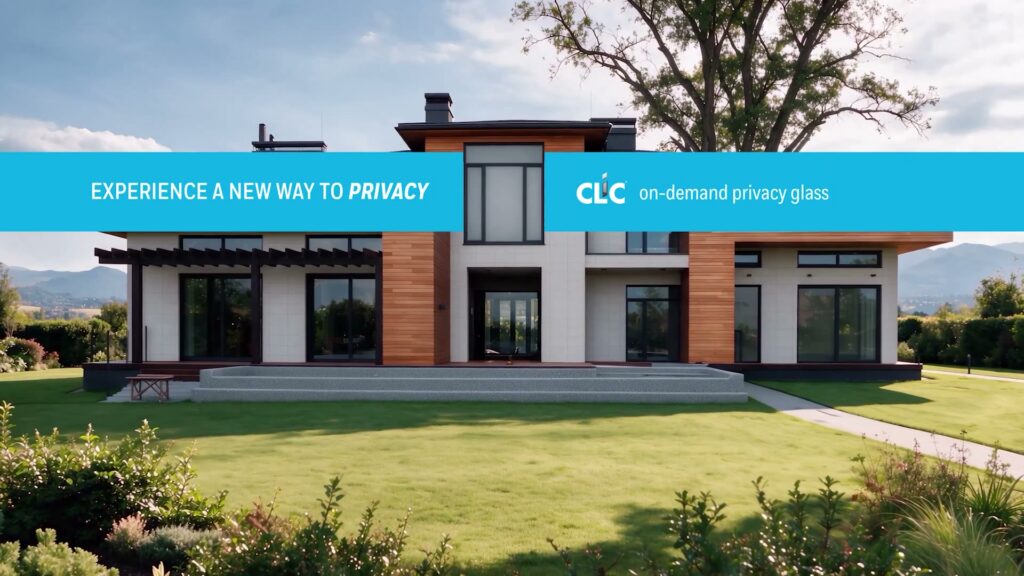
CLiC On-Demand Privacy Glass

CLiC switches a window from clear to private on demand, with no shades or blinds. See it in action, then tour the automated Tomah line and hear why Cardinal sees CLiC as a platform for the future.

Length Published

Company

  1. Cardinal Technology Overview

    Meet the Cardinal companies behind float, tempered, laminated, coated and insulating glass. Learn how they work together and how Cardinal's plant locations benefit customers across the U.S.

    Length Published

    About Cardinal

Glass technologies

  1. Float Glass Technology

    Follow the glass behind every Cardinal product through a 3,000掳F furnace and a molten tin bath. Sophisticated quality assurance systems inspect the whole ribbon, ensuring clean and clear glass.

    Length Updated

    Float glass
  2. Laminated Glass Technology

    Laminated glass is the foundation of windows that hold up to hurricanes, break-ins and street noise. Watch two panes and an interlayer become one in a cleanroom, an infrared oven and an autoclave.

    Length Published

    Laminated glass products
  3. Coated Glass Technology

    Lo膾 coatings reflect summer heat and keep winter heat indoors, so windows are more comfortable and energy efficient. Learn how coatings suit each climate, then watch panes get coated and inspected.

    Length Updated

    Lo膾 coated glass products
  4. Insulating Glass Technology

    Cardinal IG units are built to keep their seal and argon fill for years, so windows stay efficient and resist condensation. See what goes into each unit and how it is built and inspected on the line.

    Length Updated

    Insulating glass products
  5. Product Insights: Tempered Glass

    Learn how heating glass to 1,200掳F and cooling it with air makes it about four times stronger. Then watch regular and tempered panes take a 100-pound bag drop, and hear about independent testing.

    Length Published

    Tempered glass products

Cardinal Technology Overview

Meet the Cardinal companies behind float, tempered, laminated, coated and insulating glass. Learn how they work together and how Cardinal's plant locations benefit customers across the U.S.

Length Published

About Cardinal

In this video

Transcript

At Cardinal Glass Industries, innovation is at our very core.

In every plant, in every R&D center, and in every technical services site, we strive to make glass products that push the limits of science and engineering.

Our organization is divided into companies which focus on discrete glass technologies. Cardinal FG for float glass and high-volume tempered glass. Cardinal CT for custom tempered glass. Cardinal LG for secure and safe laminated glass. Cardinal CG for high-performance coated glass, all culminating into Cardinal IG for durable insulating glass units. All of these manufacturing centers work like an orchestra. Because of that, our factories are strategically located in geographic clusters for quick fulfillment.

While our manufacturing facilities vary, our philosophy is the same: a relentless pursuit of perfection. The most attractive, innovative, and unblemished glass possible. Each plant operates modern automated glass production systems. Our online real-time IQ program verifies that defect-free glass is made at every step. In addition, Cardinal employs environmentally friendly methods to reduce both waste and emissions. Our facilities are equipped with technologies to reduce chemicals and airborne particulates.

We make use of recyclable materials like glass cullet, corrugated packaging, and stretch wrap.

And all of our steel racks and glass packs are reusable and returnable.

Cardinal's customer base includes the most forward-thinking window and door manufacturers. We provide clients a range of services and support to make glass ordering accessible to any need. We have a massive production capacity to fulfill the largest of glass orders. Our products include every type of customization, including coatings, lamination, internal bars, and made-to-order shapes and sizes.

Moreover, most Cardinal plants have custom-tempering lines which allow for safety glazing at any point in the fabrication process.

Our IT organization offers advanced EDI and logistic services for easy integration with your business. So we invite you to view this series of videos that demonstrate Cardinal's state-of-the-art technologies.

Float Glass Technology

Follow the glass behind every Cardinal product through a 3,000掳F furnace and a molten tin bath. Sophisticated quality assurance systems inspect the whole ribbon, ensuring clean and clear glass.

Length Updated

Float glass

In this video

Transcript

Welcome to our technology tour where we take an inside look at the world of float glass production. Float glass is a foundational element of flat glass manufacturing.

The name comes from the process itself where liquefied sand and other materials float atop a bath of molten metal.

In its most basic form, float glass has no coatings, laminations, or treatments.

Yet it's an essential foundation for all of Cardinal's advanced glass products.

Each Cardinal FG plant is a cutting-edge operation that runs 24/7, continuously producing pristine high-quality glass. Let's analyze the process.

Every day, hundreds of tons of raw materials arrive at our FG plants beginning their journey in the batch house.

Here, the materials are tested, measured, and precisely mixed into a batch of dry ingredients that will later become glass.

Our batch materials don't just come from new ingredients. Glass is infinitely recyclable and uses significantly less energy to melt a second time. Glass scraps are carefully collected from our customers and reused in production.

This practice recycles over 170,000 tons of cullet every year, reducing our need for raw materials, saving money, and making recycled glass an essential part of our process.

The batch is then conveyed to an enormous 36-foot-wide furnace where temperatures soar up to 3,000 degrees Fahrenheit.

A mechanical charger feeds the batch into the furnace where intense heat transforms it into a four-foot-deep pool of liquid glass.

At Cardinal FG, we voluntarily invested in advanced emissions control systems exceeding regulatory standards to reduce our environmental impact. With dry scrubbers to remove sulfur dioxide, electrostatic precipitators, recycling particulate matter back into glass production, and selective catalytic reduction to cut nitrogen oxides. We've achieved a 75% reduction in emissions, reaching EPA minor source levels in all five legacy plants. Our commitment also extends to our two new float plants where we're implementing these controls to uphold the high environmental standards that define us as industry leaders.

Let's move to the next step. The liquefied glass floats smoothly across a bath of molten tin. Here, it spreads into a wide ribbon with its thickness carefully controlled by skilled technicians who monitor and adjust the processes needed.

The control room is the nerve center of the plant. Here, the manager oversees every step of the float line ensuring quality at all times.

Once the glass exits the tin bath, it enters the annealing lehr where the glass ribbon lifts gently out of the tin and is cooled in a controlled manner. This gradual cooling process ensures uniform thickness and prevents stress in the glass.

The final stage of annealing, the mass air section, is where air is bombarded onto the glass, cooling it to a temperature suitable for cutting.

Each day, 20 miles of glass ribbon pass through the cold end of the plant, producing more than 600 tons of glass. Defects in Cardinal's raw float glass are exceedingly rare.

The entire ribbon of glass is inspected by high-resolution cameras. The glass edges are monitored by lasers and the glass thickness is detected automatically.

Special lighting allows for manual inspections. Any defects found are automatically flagged and removed by cutting around the marked areas.

The XY cutters precisely score the glass with incredible accuracy.

After scoring, the glass is broken along those lines by a bump roll and edge trimming is performed.

All trimmings are collected and recycled as cullet for future production.

From here, each glass pane enters a computerized routing system.

At the packing station, the top or air side surface remains untouched to maintain a pristine surface for low-E coatings.

We take great care in packaging, wrapping, and labeling orders to ensure that our customers receive their glass in perfect condition and on time.

Our advanced tracking system allows us to deliver orders within 24 hours or less, giving our customers an unmatched level of service.

At Cardinal FG, our goal is clear: to produce the highest quality flat glass possible while maintaining environmentally responsible practices.

This is just the beginning of the glassmaking journey. Our raw float glass moves onto specialized facilities for further processing, whether it's our CT plants for custom tempering, LG plants for laminated glass, CG plants for low-E coatings, or IG plants for completed insulating glass.

Laminated Glass Technology

Laminated glass is the foundation of windows that hold up to hurricanes, break-ins and street noise. Watch two panes and an interlayer become one in a cleanroom, an infrared oven and an autoclave.

Length Published

In this video

Transcript

We're going to look into an important safety glazing called laminated glass. Laminated glass panes are constructed by uniting two sheets of annealed, heat strengthened, or tempered glass with a sturdy interlayer, then applying heat and pressure to create an inseparable bond. It provides safety features that make it both less likely to break and less likely to pose a threat when broken.

For security, laminated glass deters would-be intruders due to the difficulty of puncturing the interlayer.

In noisy environments, laminated glass can help you turn the volume down by dampening unwanted sounds.

Also, laminated glass cuts out the majority of ultraviolet rays, which slows the discoloration of interior furnishings and objects.

And for hurricanes, Cardinal SeaStorm glass is specially designed to withstand multiple impacts during the worst weather moments. If flying debris breaks the laminated pane, the fragments remain bonded to the interlayer, protecting both the occupants and the home's structural integrity. With those things in mind, let's watch how laminated glass gets produced every day.

Cardinal has developed and perfected the laminating process in order to offer superior service and quality to customers.

On a daily basis, raw float glass from our FG plants is delivered. A gantry continually feeds glass to the cutting table.

A computerized system scores the large sheets into smaller pieces.

Every portion of the glass sheet is utilized to deliver the highest yields possible.

The sheets continue to the breakout area, where the glass is bumped and separated into individual pieces.

Any leftover glass is collected for recycling back to the float plants.

Then, seamer operators grind the edge of the glass for safety and durability.

The glass then gets placed on a rack.

Since particles trapped inside laminated panes can contaminate glass adhesion, a thorough washing and drying cycle is required.

The final step before assembly is to add a laser logo for safety glazing certification.

The glass panes now enter the dust-free, temperature-controlled cleanroom.

Here, technicians place the interlayer on one of the panes of glass that enters.

Another glass pane is fitted on top of the interlayer.

Any excess then is cut away. The glass sandwich is now ready for the two-step adhesion process.

First, the glass passes through a high-temperature infrared oven, which softens the interlayer material. Nip rollers squeeze the glass, removing air and creating the initial bond.

At this point, the opaque glass is loaded onto a rack.

The second step is the autoclave. The laminated glass enters the autoclave chamber.

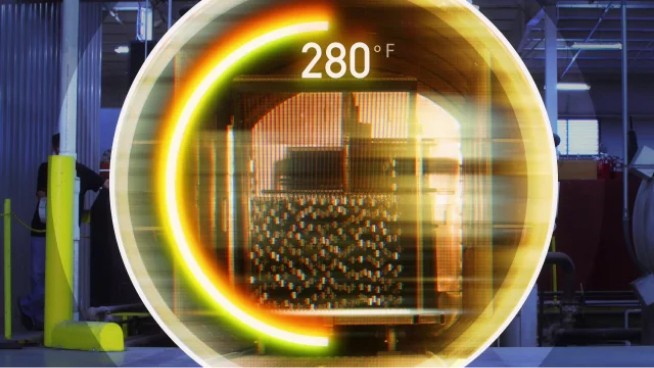
Here, it is subjected to heat at 280 degrees Fahrenheit at more than 12 times atmospheric pressure for two hours. The autoclave removes residual moisture and finalizes the interlayer adhesion to the glass.

Now, the product comes out clear.

Technicians perform a final trim of any remaining interlayer and place the panes on the conveyor for online glass inspection.

Specialized cameras check every single pane to verify that it is free of any defects. The laminated glass is then packaged for delivery.

There are many reasons to choose Cardinal LG for laminated glass.

For custom designs, we supply any shape or size required. Our dedication to daily testing ensures that safety and reliability are at the forefront.

And we work with customers to ensure that completed window and door products pass important building and safety codes.

So not only is our laminated glass reliable, you can count on Cardinal LG as a provider to deliver the safety and security your window customers need.

From here, our laminated glass is transported to our other facilities, like our IG plants for complete insulating glass units.

Coated Glass Technology

Lo膾 coatings reflect summer heat and keep winter heat indoors, so windows are more comfortable and energy efficient. Learn how coatings suit each climate, then watch panes get coated and inspected.

Length Updated

In this video

Transcript

Welcome to Cardinal CG, let's do a tour of our low-E coated glass facilities.

Low-emissivity, or low-E, coatings are made up of thin layers of materials applied to flat glass in multiple optically transparent layers.

These layers are made up of pure materials like silver, titanium, and zinc.

Low-E glass makes up part of an insulating glass unit where two or more panes of glass are sandwiched together to create a thermally efficient barrier. They reduce solar heat gain by reflecting some of the sun's heat away, keeping the inside cooler in hot weather.

They reflect indoor thermal heat back into the room, helping keep it warmer in cold weather.

Cardinal's Lo膾 branding describes the technology behind each glass type. The number immediately following Lo膾 indicates how many silver layers are applied, while the number that follows represents the approximate percentage of visible light transmittance.

Cardinal offers multiple levels of patented low-E protection. Single silver coatings, advantageous for passive solar control in northern climates. Double silver coatings, ideal for mid-range performance. Triple silver coatings, designed for all-climate glass solutions.

Special double and triple silver coatings for glare control. And quad silver coatings made for maximum solar heat gain protection, remarkable clarity, and 99% UV blockage.

Additionally, room-side surface coatings enhance cold weather protection, and exterior surface coatings make glass stay clean longer and easier to clean. How do we create these advanced coatings?

It all starts in the Cardinal CG Technology Center. With a strong portfolio of coated glass patents, our team drives innovation through research, product development, and rigorous testing.

Across the U.S., each of our coaters can produce up to 10 million square feet of coated glass each month.

This includes coatings for annealed glass, post-temperable coatings, and options designed for laminated glass applications, each tailored to meet specific requirements.

Let's zoom in on the CG plant operations.

Every day, float glass arrives at our facilities on A-frame racks weighing up to five tons.

The glass is carefully handled throughout the process to avoid contact with the top or air side of the glass where low-E coatings will be applied.

The process begins with washing. Each sheet, up to 96 by 144 inches in size, is thoroughly cleaned with deionized water and dried with high pressure air to ensure the surface is spotless.

The entire coating line is longer than the length of a football field.

The glass enters the line through the vacuum chambers. Here, we go from atmospheric pressure to extremely low vacuum, creating the perfect environment for generating plasma.

At the heart of the coating line is a technology called magnetron sputtering. This is how low-E coatings are applied to the glass. Each cathode chamber holds a high voltage magnetron.

When activated, it interacts with a gas in the chamber which forms a plasma.

Positively charged ions from the plasma strike the coating material, dislodging its atoms.

These atoms are then evenly deposited onto the glass surface.

For our Neat+ coating, a sputter-up process applies a titanium-based layer to the opposite glass surface in the same pass as standard low-E coatings.

For low-E coatings, a sputter-down method applies materials to the glass's topside surface.

Each pass through the coating line may involve up to 60 cathodes, layering materials in precise combinations from the comparatively simple to the more complex.

Regardless of the complexity, the entire coating stack is incredibly thin, roughly 500 times thinner than a human hair.

Throughout the process, advanced cameras and instruments inspect each glass pane for defects.

In the control room, technicians monitor every step, ensuring each pane meets exact specifications for color, light transmittance and reflectance, and thermal and solar performance.

Continual adjustments are made to maintain exact performance requirements.

After inspection, an accumulator gathers the glass, managing the fluctuations of this non-stop operation. The glass is carefully cut, packaged and wrapped for delivery.

Customers from around the world have come to depend on Cardinal CG's unique coating operations.

Through heavy R&D investment and meticulous execution, we remain the world leader in low-E coating technologies.

From here, our low-E coated glass is transported to other Cardinal facilities like our LG plants for laminated glass and IG plants for complete insulating glass units.

Insulating Glass Technology

Cardinal IG units are built to keep their seal and argon fill for years, so windows stay efficient and resist condensation. See what goes into each unit and how it is built and inspected on the line.

Length Updated

In this video

Transcript

Welcome to Cardinal's insulating glass fabrication facilities.

Cardinal sets the global standard for durable, warm-edge insulating glass units.

Our IG units integrate premium components.

Each unit features two or more panes of clear or low-E coated glass.

A warm-edge stainless steel spacer serves as the structural core. A polyisobutylene primary sealant blocks moisture and retains the argon gas.

A silicone secondary seal provides structural integrity. Desiccants ensure optimum moisture adsorption.

Insulating glass, coupled with our low-E coatings, create a powerful thermal barrier for greater comfort and energy efficiency.

It keeps heat inside during cold weather and resists interior condensation.

On warm days, it blocks solar heat from entering the room.

Cardinal insulating glass units are engineered for flexibility across a range of applications. We provide annealed, tempered, laminated or privacy glass configurations to meet specific safety, security, or acoustic requirements.

Spacer options include natural stainless steel or painted finishes for a refined look.

For added visual appeal, our IG units can incorporate decorative internal grids or simulated divided lights to complement architectural styles.

We also offer custom shapes and sizes, ensuring each unit fits your project with precision.

Window and door manufacturers worldwide rely on Cardinal for the best insulating glass units.

How do we consistently deliver?

Continuous research and development drive our innovation.

At Cardinal's IG Technology Center, we continually refine our edge seal system and test product performance to help ensure IG units in the field are not compromised by incompatible materials, chemicals, or moisture.

We evaluate seal durability, thermal performance, material stability, and argon retention to support long-term reliability.

Regular auditing ensures every plant adheres to Cardinal's standards of quality, and this protection is built into every IG unit we produce.

The result is clear. Cardinal delivers the industry's lowest insulating glass failure rates in the world. Proven with hundreds of millions of IG units in the field, we stand behind our products with an industry-leading 20-year seal integrity guarantee.

Our insulating glass is built to last.

Quality alone isn't enough. Our customers also require fast, reliable delivery. How do we do it?

Cardinal's automation group specializes in automating insulating glass production.

Using advanced robotics, we overcome complex manufacturing challenges.

Engineers at our IG facilities design, test, and deploy custom automation equipment to keep production fast and flexible.

This expertise ensures just-in-time delivery, even as customer orders change daily.

Now, let's explore Cardinal's streamlined insulating glass production line.

Glass arrives daily from our supporting facilities.

At the cutting table, robotic scoring machines cut large glass sheets into individual panes tailored to customer orders.

Automated guided vehicles safely and efficiently transport glass racks to feed IG production lines.

At the production line, coated panes undergo edge deletion, removing the low-E coating around the perimeter to ensure strong adhesion for sealants.

Real-time inspections catch even the smallest surface defects on both clear and coated glass.

At the spacer line, technicians form stainless steel spacers, preparing them with continuous bent corners and detailed muntin and SDL patterns.

After applying the primary polyisobutylene sealant, spacers move to the assembly area.

At the assembly line, technicians carefully attach the spacer to a single pane of glass.

Assembly begins with Cardinal's proprietary assembly gas press. This unique machine combines three processes into one streamlined operation: assembling glass components, injecting argon gas, and compressing the unit into an airtight product. The AGP builds multiple IG units at a time, boosting our production efficiency by up to 80%.

As part of our quality control, insulating glass units undergo verification of argon fill levels, overall unit thickness, and color consistency.

Laser logos are applied for branding, traceability, and regulatory compliance.

Next, Cardinal's Preserve film is applied, safeguarding glass surfaces from scratches through shipping, handling, and installation.

Finally, our advanced robotic sealing system known as the "Squid" precisely applies an even layer of silicone as a secondary seal. This reinforces the unit's durability against environmental stresses and ensures lasting performance.

At this point, the product is complete. Our IG units are delivered in production-ready sequence and orientation, enabling customers to feed them directly into their window and door manufacturing lines.

Cardinal delivers high-quality, made-to-order insulating glass with just-in-time production. Partnering with Cardinal means receiving unmatched quality backed by a 20-year warranty, keeping your windows and doors competitive today and for decades to come.

Cardinal, engineering the future of glass.

Product Insights: Tempered Glass

Learn how heating glass to 1,200掳F and cooling it with air makes it about four times stronger. Then watch regular and tempered panes take a 100-pound bag drop, and hear about independent testing.

Length Published

In this video

Transcript

Cardinal's tempered glass is a strong foundation for safety glazing.

Glass tempering is done by subjecting raw float glass to a temperature of 1,200 degrees Fahrenheit, and then quickly cooling it with air. This process increases tensile strength in the center and compressive strength at the surface. The resulting pane comes out approximately four times stronger than regular annealed glass.

And if it breaks, the glass shatters into tiny pieces, eliminating risk of human injury.

Let's look at a comparison. An industry standard testing protocol is called the bag drop test. A 100-pound shot-filled bag is hung from a pendulum and dropped from at least 48 inches.

When a regular pane of glass undergoes the test, it easily shatters into large, unsafe shards.

But notice what happens when tempered glass is tested.

No fracture.

Even after repeated attempts, the tempered glass remains intact.

Cardinal uses the Safety Glazing Certification Council to conduct independent safety testing.

Our high-volume and custom tempered glass is able to meet the latest safety glazing protocols.

Additionally, our online testing gives us data-rich feedback to improve our manufacturing capabilities and ensures that glass distortion remains minimal and color is virtually unnoticeable.

Cardinal's tempered glass is adaptable to any custom size, shape, and low-E coating.

And our commitment to customer satisfaction is the highest in the industry.

If your window designs require safety glazing, consider Cardinal's tempered glass.

CLiC On-Demand Privacy Glass

CLiC switches a window from clear to private on demand, with no shades or blinds. See it in action, then tour the automated Tomah line and hear why Cardinal sees CLiC as a platform for the future.

Length Published

In this video

Transcript

CLiC is a product that offers privacy without the need to walk over and open and close shades and blinds. Unlike other competitive liquid crystal-based smart glass products, CLiC is essentially hazeless. You have no compromising the clear state aesthetics on angle or off angle. The CLiC product in all daylight conditions is clear, just like you would expect the window to be, and private when you want it on demand.

How we're using CLiC in your living space or in your designs is that the homeowner or the person in the space has complete control over that space.

Before we could offer CLiC for sale, we had to be comfortable that we had enough durability, so it's a product that's going to last.

We started this plant in 1988 with a small group of people and only 60,000 square feet. One of the focuses at that point was getting the right people here to learn the process and run the process. When you think of next-generation manufacturing, if we think of robotics, automation, data analysis, those types of things are all the things that we're integrating with CLiC. Our line is a touchless process, so we're focused on quality over quantity, knowing that when we dial in the quality of our product, the volume will come with it. What impresses me most today is the scalability of CLiC in this factory. The ability to manufacture high-volume smart glass products is just something we never had the capability of until we invested in the engineering resources required to do this level of automation.

We see CLiC as a major piece in Cardinal's future because it is a platform and not simply a product. We know that we are able to continue to advance and keep pushing the limits of what glass in buildings and residential homes can do. I think we're just getting started with where we're at today. The liquid crystal-based technology that's the fundamental platform for the CLiC product can offer many features long-term. This is the one case where not seeing is believing, so it's really clear.